
What’s the basic sequence?
Undress fully in the changing room, wash and rinse completely at a seated shower station, then enter the bath and soak quietly. Keep your small towel and hair out of the water. That four-step routine — undress, wash, soak, dry off — is the whole thing.
- Undress fully in the changing room (no swimwear — leave everything in a basket or locker).
- Sit at a shower station and wash and rinse your whole body before entering.
- Enter slowly and soak quietly; keep your towel and hair out of the water.
- Rinse or pat dry before heading back so you don’t drip in the changing room.
What are the rules I must not break?
Three things: wash before you get in, never put a towel or soap in the bath water, and keep noise down. The bath is for soaking, not cleaning or splashing. Get those right and nothing else really matters — the rest is just relaxing.
| Do | Don’t |
|---|---|
| Wash thoroughly before entering | Get in without rinsing |
| Keep the small towel out of the water | Dip your towel in the bath |
| Tie up long hair | Let hair touch the water |
| Soak quietly | Swim, splash, or be loud |
Do I have to be fully naked?
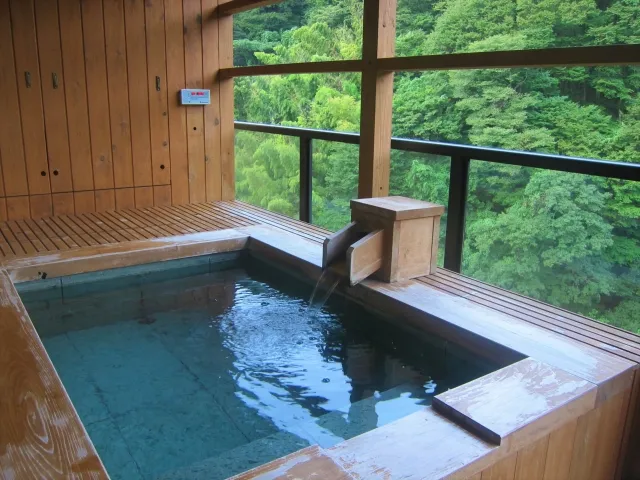
Yes — public onsen are enjoyed nude, no swimwear. It feels strange for about ninety seconds, then no one is paying any attention. If that’s a dealbreaker, book a private (貸切 / kashikiri) bath or an inn room with its own bath, where you bathe alone or with your group.
The nerves almost always vanish within a minute or two — everyone is there to relax, not to look. The travelers who struggle are usually the ones who skipped the wash-first step, which is the one rule locals really do notice.
What if I’m shy, or I have tattoos?
You have easy options: a private bath removes the crowd entirely, and many baths now accept covered or small tattoos. Ask ahead and you’ll almost always find a way in. The one thing not to do is skip the question and hope — sort it before you go.
Tattoos are common enough to deserve their own guide: Can I use a Japanese onsen if I have tattoos?