
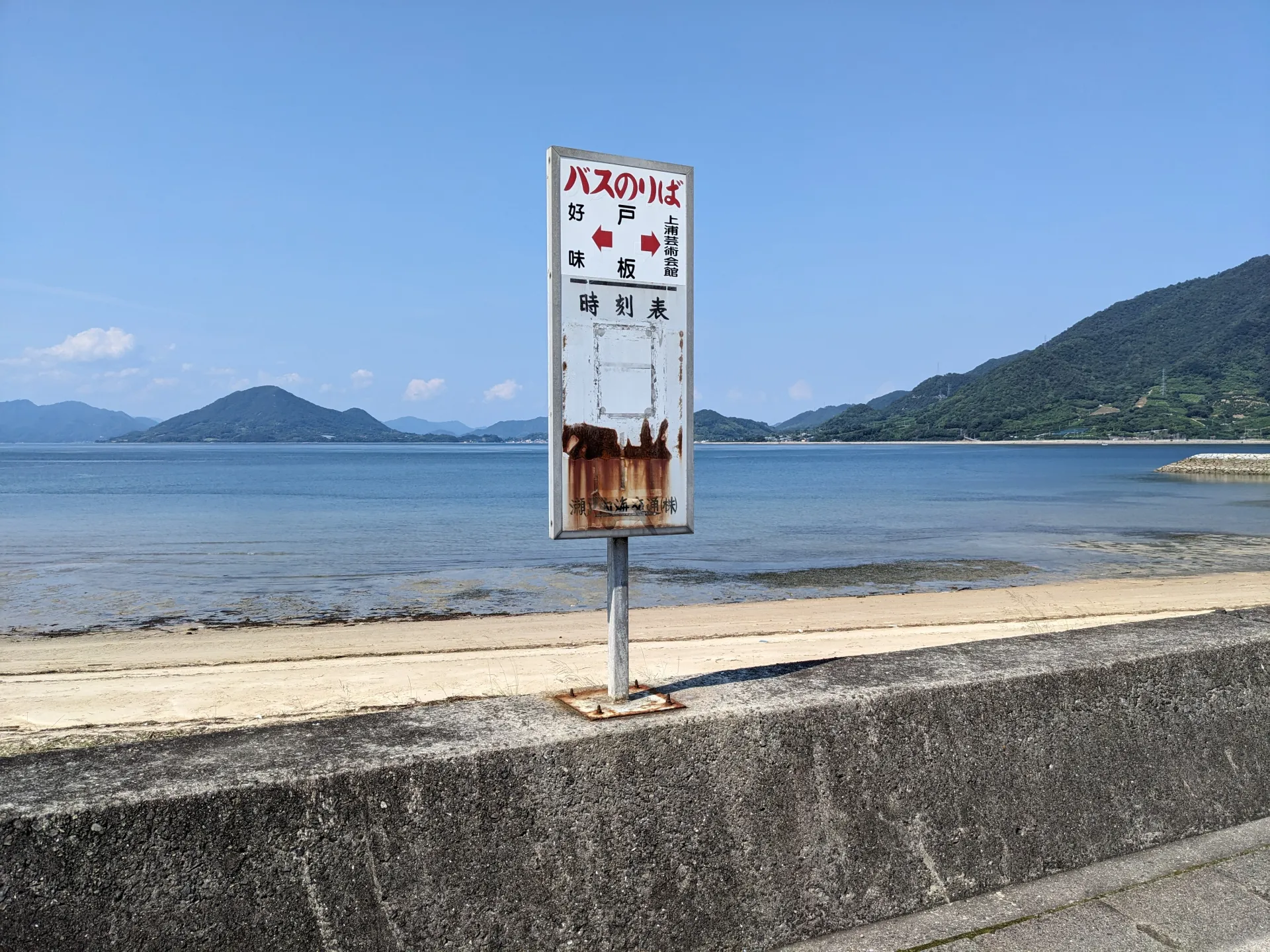
Which kanji do I actually need?
A small set unlocks most rural timetables: 平日 (weekday), 土日祝 (weekends and holidays), 発 (departure), 行 (bound for), 経由 (via), and 終バス (last bus). Find the block that matches your day, confirm the destination, then read the departure hours down and the minutes across.
| Kanji | Reading | Meaning | Why it matters |
|---|---|---|---|
| 平日 | heijitsu | Weekday | The most frequent service (Mon–Fri) |
| 土日祝 | donichishuku | Weekend/holiday | Often reduced or none |
| 発 | hatsu | Departure | The time you actually care about |
| 行 | yuki / iki | Bound for | Confirms direction |
| 経由 | keiyu | Via | Confirms it stops where you need |
| のりば | noriba | Boarding point | Which stop/bay to wait at |
| 終バス | shū-basu | Last bus | Don’t get stranded |
| 運休 | unkyū | No service | Cancelled on certain dates |
How do I read the timetable, row by row?
Work in four moves: match today to the 平日 or 土日祝 column, confirm the 行 (destination) and 経由 (route), then read the hour down the left edge and the minutes along that row. Finally, note the 終バス (last bus). Do it in that order and you won’t board the wrong bus.
- Match today to the correct column:
平日(Mon–Fri) or土日祝(weekend/holiday). - Confirm the
行(bound for) name and any経由(via) so the bus goes where you need. - Read the hour down the left, then the minutes across that row.
- Find the
終バス(last bus) and plan your day backward from it.
What’s the trap that strands people?
The classic mistake is reading the 平日 (weekday) column on a weekend. Rural routes often run far fewer buses — or none — on 土日祝, so a schedule that looks frequent may not apply on the day you travel. Always confirm which column matches today before you plan the last bus back.
The travelers I’ve seen get stuck almost always made the same mistake: they read a frequent-looking column that was actually weekday-only, on a Sunday. Check the header first, every time — it’s the difference between a relaxed day and a long walk.
Do rural buses take IC cards, or only cash?
Assume cash. Many countryside routes don’t accept Suica or ICOCA and expect coins or small notes, sometimes exact change. Keep a stash of ¥100 coins and ¥1,000 notes for buses, and treat IC cards as a lucky bonus rather than the plan.
For how much cash to carry and where to withdraw it, see Cash, cards & country Japan. Prices and schedules change with the timetable revision (as of 2026-08) , so check the posted board on the day.