
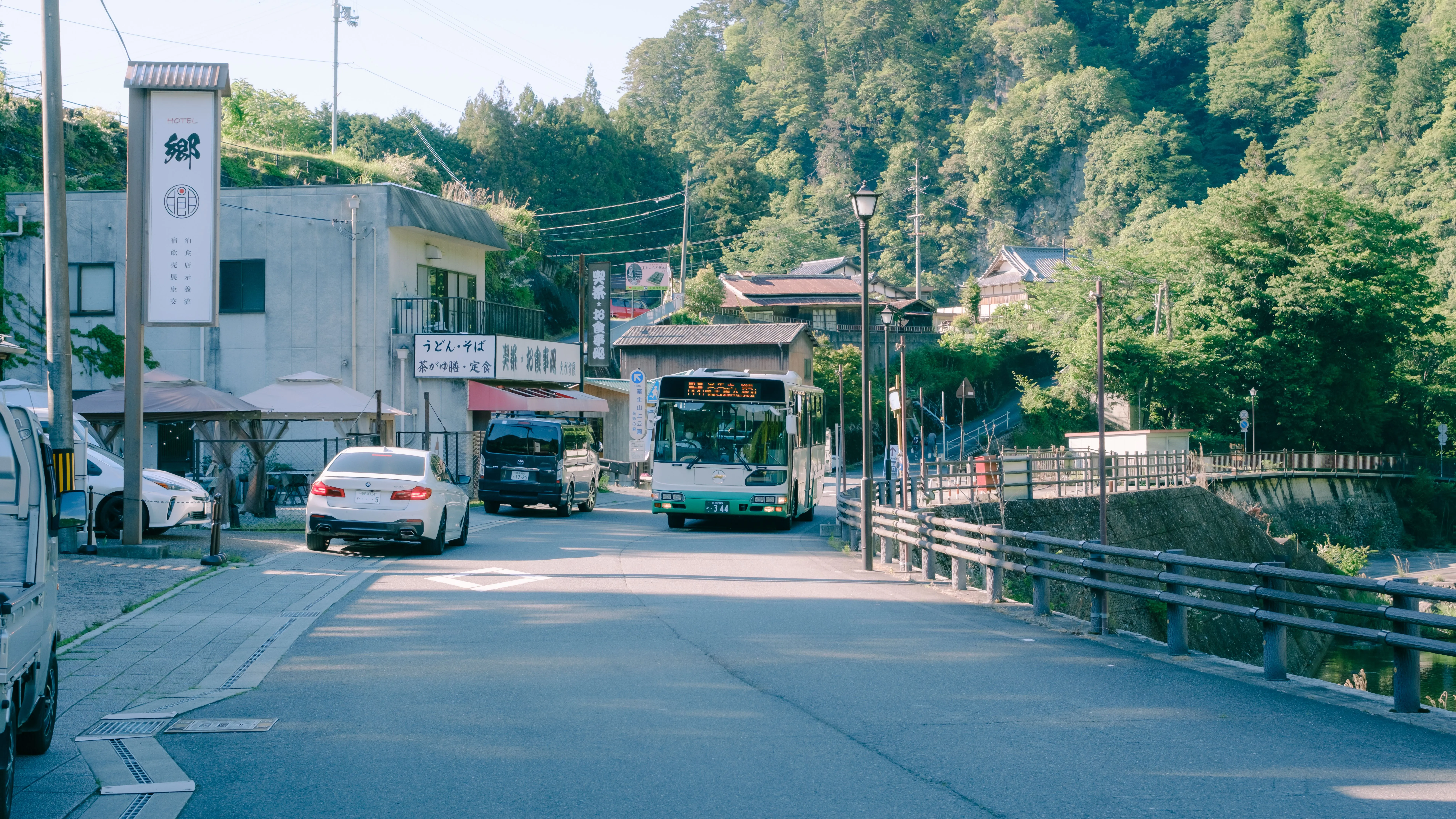
Why is the last bus such a big deal?
Because in the countryside there’s usually no safety net. Miss the last bus and there may be no later service, no waiting taxi, and no nearby station. What would be a minor delay in the city can mean an unplanned night out here — so the last bus sets the shape of your whole day.
Rural routes can run just a few times a day, and the final departure is often surprisingly early — especially on weekends. Treat it as a hard deadline, not a rough guide.
Almost every “we got stuck” story I hear starts the same way: a great day out, then a sprint to a bus that had already gone. Checking the last departure first is the single habit that prevents it.
How do I find the last bus time?
Read the posted timetable in the correct day column (平日 weekday, or 土日祝 weekend/holiday) and take the bottom departure — often marked 終バス. Photograph it the moment you arrive so you’re not squinting at a dark bus stop later. Weekend service usually ends earlier than weekday.
New to Japanese timetables? See reading Japanese-only bus timetables.
How do I plan my day around it?
Work backward from the last bus with a buffer. Decide your return departure first, subtract 30–60 minutes for walking back and delays, and let that fix how long you can explore. It feels strict, but it turns a stressful dash into a relaxed day.
- On arrival, photograph the
終バス(last bus) time in the correct day column. - Plan your day backward from it, leaving a 30–60 minute buffer.
- Save the timetable offline and note your inn’s phone number.
- Carry enough cash for a taxi, just in case.
What if I miss it anyway?
Stay calm and use your backups: call a local taxi (often cash-only and scarce), ask your inn if they can pick you up, or look for nearby lodging. None are guaranteed in the countryside, which is exactly why the cash buffer and your inn’s number are worth having ready.
A cash reserve is part of this — see Cash, cards & country Japan.